Apilarnil with honey (50%-50%), in ice packs, for the freezer
A creamy honey concentrate, cleverly portioned, for daily energy, vitality, and vigor 🍯❄️
Apilarnil with honey (50%-50%), stored in the freezer in ice cube trays or silicone molds, is a concentrated bee product that is easy to dose and has traditionally been recommended for energy, vitality, physical stamina, and to support the body during demanding periods. It should be taken in short courses, with caution in cases of allergies and hormonal disorders.
Servings: 50 servings
~50 servings ranging from 7 g to 20 g per serving
Ingredients
Materials
- - a large, clean, and dry container
- - a wooden spoon or food spatula
- - a hand mixer or blender
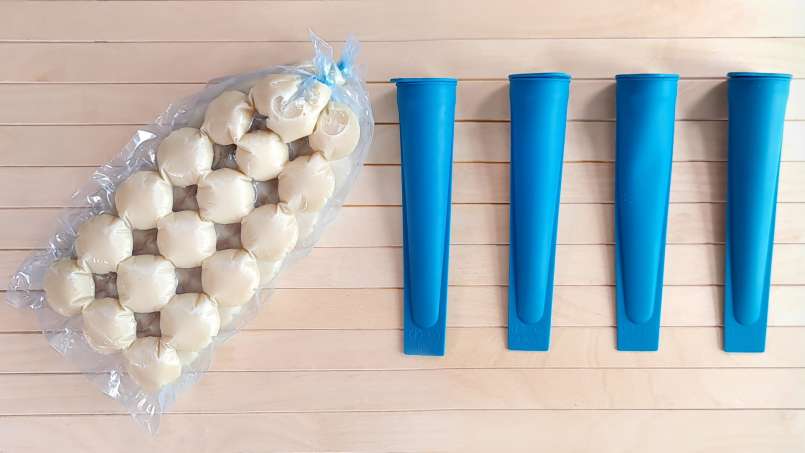
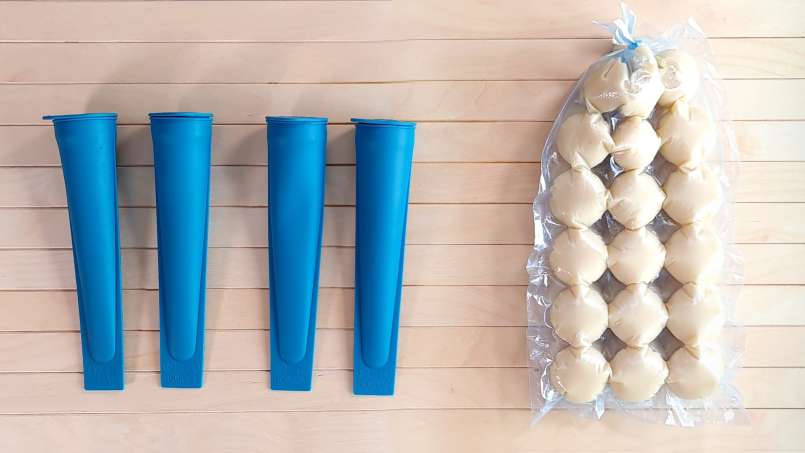
- - an ice cube bag
- - 4 long silicone molds or small molds with lids
- - food-grade funnel or large syringe without a needle, for cleaner filling
- - disposable gloves
- - labels for the preparation date
- - small tray to hold the molds in the freezer
Preparation
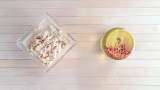 Preparing the Ingredients
Remove the apilarnil from the freezer just a short time before preparing the dish. Ideally, it should still be very cold, but soft enough to be blended. Placing the apilarnil in a container
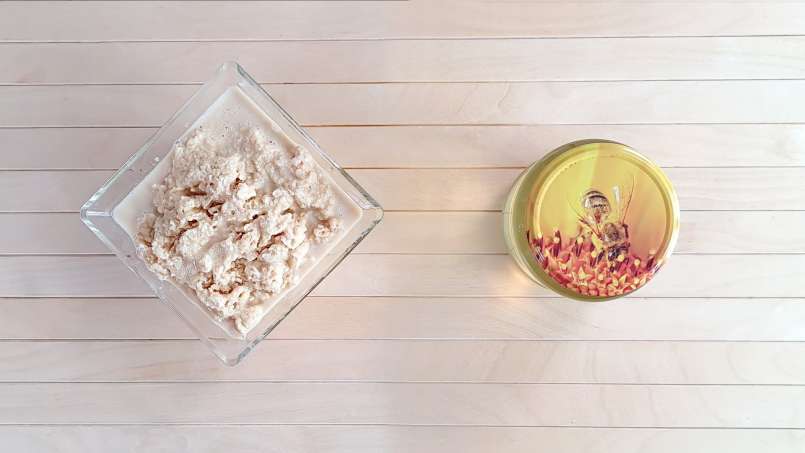
Place the apilarnil in a clean, spacious container. If it is a solid block, let it sit at room temperature for a few minutes, without thawing it completely. Adding Acacia Honey
Add the honey to the apilarnil in equal amounts by weight. For a balanced recipe: 350 g apilarnil + 350 g honey. Initial Mixing
Start with a wooden spoon or spatula. The mixture will be thick, sticky, and difficult to blend, especially if the apilarnil is still frozen. Blending with a vertical mixer
Blend briefly, in short bursts, until you obtain a smooth, homogeneous, light yellow cream. Do not overmix or heat the mixture. The goal is simply to blend the ingredients. Pouring into Molds
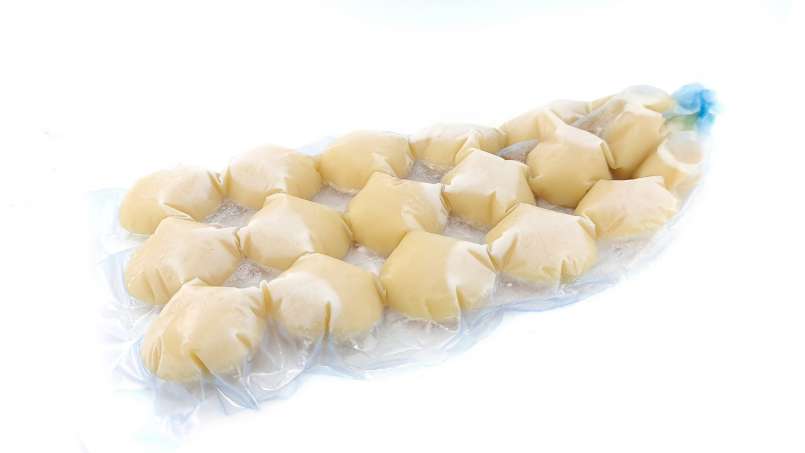
Pour the mixture into ice cube bags or silicone molds. Keep in mind that, because of the honey, the mixture won’t harden completely in the freezer; instead, it will remain semi-solid and creamy, so silicone molds are easier to use.- Freezing Immediately
Place the molds in the freezer immediately. Arrange them on a tray so they stand upright and the mixture doesn't spill.
Storage 🧊
▪️ Best consumed within 3–6 months, although it can last longer if kept at a consistently low temperature.
▪️ Do not leave at room temperature any longer than necessary to remove a serving.
▪️ Do not refreeze after thawing.
▪️ Label the containers with the date of preparation and the ratio: Apilarnil + honey 50%-50%.
▪️ For daily consumption, it’s more convenient to have small portions rather than large ones. If you use long silicone tubes, these should not be considered “one portion”; instead, they can be portioned out later with a teaspoon.
🍯 Honey has good stability due to its low water content and antimicrobial properties, but here it is mixed with raw apilarnil, so freezing is much more suitable than storing it at room temperature. Recent studies on honey show that temperature and storage duration influence the physicochemical properties and biological activity of honey.
Administration
Consume it cold, straight from the freezer, after letting it sit for 1–3 minutes to soften slightly.
Ways to consume it:
🔹 1 small cube in the morning, on an empty stomach;
🔹 1 level or heaping teaspoon, if the remedy is removed from a silicone mold;
🔹 held slowly in the mouth for gradual absorption;
🔹 mixed with a teaspoon of plain honey, if the taste is too strong;
🔹 added to cold yogurt or a cold smoothie, but not to hot tea.
🔥 Do not add to hot liquids to avoid degrading the sensitive compounds in bee products.
Recommended dosage for adults:
🔹 maintenance: 1 teaspoon per day, in the morning;
🔹 during stressful periods: 1–2 teaspoons per day, in the morning and possibly at lunchtime;
🔹 short courses: 10–30 days, followed by a break.
⚠️ For sensitive individuals, start with ¼ teaspoon for the first 1–2 days.
Observations
Frozen bee paste: the recommended ratio is 50% apilarnil + 50% honey, in equal amounts by weight. Acacia honey is suitable because it has a mild flavor, crystallizes more slowly, and partially masks the distinctive taste of apilarnil.
📌 Practical note: A 700 g mixture yields approximately 580–600 ml, since honey is denser than water. This volume is sufficient for one bag of cubes plus a few small silicone molds.
Keep in mind:
🔸 The remedy is concentrated and should be used in small amounts.
🔸 Ice cube trays are practical for dosing, but ice cube bags can be inconvenient because the mixture remains creamy and doesn’t freeze solid.
🔸 Small silicone molds with lids are better than traditional ice cube trays.
🔸 If you use long silicone tubes, fill them only partially or mark the portions so you don’t end up with portions that are too large.
🔸 Apilarnil has a distinctive taste—slightly tart and fermented—and acacia honey makes it more palatable.
🔸 For the first dose, start with a very small amount.
🔸 It is not a dessert, but a tonic bee product.
🔸 It does not replace medical treatments and should not be presented as a treatment for serious illnesses.
Effects and benefits
- ⚡ Supports energy and overall vitality
- 💪 Helps the body during periods of physical fatigue
- 🧠 Supports mental clarity and endurance during intellectual effort
- 🔥 Contributes to vitality and zest for life
- 👨 Supports male vitality
- ❤️ May help support libido during short-term use
- 🌱 May support male fertility as a traditional adjunct
- 🏋️ Supports endurance during physical exertion
- 🔄 Helps with recovery from overexertion
- 🍯 Provides valuable nutrition through the combination of apilarnil and honey
- 🛡️ Supports the immune system through bioactive bee compounds
- ✨ Contributes to the body’s antioxidant protection
- 🌞 May reduce feelings of weakness and lethargy
- 🧘 Supports the body during periods of stress and strain
- 🧬 May contribute to the body’s functional balance
- 🩺 May be useful during convalescence as a tonic food, with medical approval
- 🏃 Supports active individuals, athletes, and those with high activity levels
- 🧊 Allows for easy dosing thanks to its frozen cube form
- 😋 Honey makes Apilarnil taste better and easier to consume
- ❄️ Freezing helps preserve raw Apilarnil better
- 🌿 Can serve as a natural tonic during periods of low energy
- 🕊️ May support overall well-being
- 🧡 Helps supplement your diet with nutrients from bee products
- ⏳ Suitable for short, well-measured courses of treatment
- ✅ Easy to take daily in small, controlled portions
Side effects
- ⚠️ Allergic reactions to bee products
- 🌿 Itching, redness, irritation, or hives
- 🚨 Swelling of the lips, tongue, face, or throat
- 😮💨 Difficulty breathing in people with allergies
- 🤢 Nausea or stomach discomfort
- 💨 Bloating
- 🚽 Mild diarrhea, especially with excessive doses
- 😖 Intense flavor, which some people find hard to tolerate
- 🌙 Restlessness or difficulty sleeping if consumed in the evening
- 🩸 Increased blood sugar levels due to the high honey content
- 🔥 Sensation of heat, restlessness, or palpitations in sensitive individuals
- 😵 Headaches, rarely, in cases of individual sensitivity
- 🧴 Possible worsening of acne in people sensitive to hormonal stimuli
- 🦠 Digestive discomfort if the product has not been stored properly
- ❌ Individual intolerance to raw apilarnil or honey
Contraindications
- 🚫 Allergy to honey, pollen, propolis, royal jelly, bee venom, or other bee products
- 🚨 History of anaphylactic shock or severe allergic reactions
- 👶 Children under 1 year of age, as honey is not recommended for infants
- 🩸 Diabetes or uncontrolled blood sugar levels
- 🎗️ Hormone-dependent cancers, without medical approval
- ⚖️ Significant hormonal disorders, without a doctor’s recommendation
- 🤰 Pregnancy and breastfeeding, without medical approval
- 🧒 Administration to young children, without a pediatrician’s recommendation
- 😮💨 Allergic asthma or severe allergic predisposition
- 🛡️ Active autoimmune diseases, without medical supervision
- 💊 Ongoing hormonal treatments or endocrine therapies
- 🤢 Digestive intolerance to raw bee products
- 🍬 Strict low-carbohydrate diet or severe sugar restriction
- 🌙 Insomnia, restlessness, or sensitivity to stimulants, especially when consumed in the evening
- ⏳ Consumption in high doses or over the long term, without breaks and without assessing tolerance
🔸 Unlike royal jelly, which is associated with the queen’s diet, Apilarnil comes from drone brood. Therefore, the two products should not be confused. Apilarnil has its own distinct identity, with a different taste, texture, and nutritional profile, and is considered more of a concentrated bee tonic, suitable for short, carefully dosed treatment regimens.
🔸 An interesting detail is that apilarnil has a creamy, slightly milky texture and a distinctive sweet-and-sour taste that is more intense than that of honey. For this reason, combining it with acacia honey is very practical: the honey mellows its taste, makes it easier to administer, and helps achieve a homogeneous consistency, suitable for portioning.
🔸 Raw Apilarnil is a delicate and perishable product. Its quality depends heavily on freshness, the harvesting method, and how quickly it is refrigerated. That’s why the version in ice cube trays or silicone molds is useful: it allows you to divide the remedy into small doses that are easy to remove from the freezer without having to thaw the entire batch.
🔸 Because the mixture contains a lot of honey, it won’t behave exactly like frozen water. In the freezer, it may remain semi-solid, dense, and slightly sticky, which is normal. This doesn’t mean the remedy has gone bad; it just means that the natural sugars in the honey affect the final texture.
🔸 The recipe is especially suitable for people who want a honey-based remedy that’s easy to measure out, without having to weigh it daily or repeatedly open jars. A small serving, taken in the morning, can be easily incorporated into a revitalizing regimen, especially during periods of fatigue, physical exertion, stress, or low energy.
🔸 As a concentrated bee product, apilarnil with honey should not be viewed as a simple dessert. It should be consumed in small amounts, with breaks between courses, and with attention to the body’s reactions. People who are allergic to bee products, those with diabetes, hormonal disorders, or ongoing medical treatments should seek the advice of a specialist before use.
FAQ 💡❓
Why is Apilarnil in honey cubes more practical than in a jar?
➡️ Because the portions are already pre-measured, you don’t have to thaw the entire jar, and you minimize repeated exposure of the mixture to air, a spoon, or room temperature.
Why doesn’t the mixture freeze completely, even when stored in the freezer?
➡️ Honey has a high concentration of natural sugars, which lower its freezing point. That’s why the mixture remains more creamy, sticky, or semi-solid, rather than hard like ice.
Is it better to use ice bags or silicone molds?
➡️ Silicone molds are more practical. The mixture can be difficult to remove from ice cube bags because it doesn’t form a hard cube. Silicone allows for easier removal and cleaner portioning.
Why is acacia honey used instead of another type of honey?
➡️ Acacia honey has a delicate flavor, a light color, and crystallizes more slowly. This way, it retains a finer texture and doesn’t overpower the taste of apilarnil.
Can I add the remedy to hot tea?
➡️ It is not recommended. If you want to consume it with liquids, use cold water, a cold smoothie, or yogurt. Heat can affect the sensitive compounds in bee products.
Why is it taken mainly in the morning?
➡️ Because it is a tonic. For some people, it may cause energy surges, mild restlessness, or difficulty falling asleep if taken in the evening.
How large should a serving be?
➡️ A practical serving size is 1 teaspoon or one small cube, approximately 7–15 g. If the pieces are large, don’t consume the whole piece at once; instead, measure it out with a teaspoon.
Can I take Apilarnil with honey every day, all year round?
➡️ Short courses of 10–30 days, followed by a break, are more appropriate. Since it is a concentrated product, it is not ideal to consume it continuously without assessing your tolerance.
What should I do if I don’t like the taste?
➡️ You can keep it in your mouth for a shorter time and take it with a little cold yogurt or another teaspoon of honey. Do not mix it into hot beverages.
Is it suitable for athletes?
➡️ It can be used as a nutritious bee tonic, especially during periods of physical exertion, but it should first be tested in a small dose. Do not take it for the first time before an important workout.
Why should you be careful about allergies?
➡️ Because apilarnil and honey are bee products, and people who are sensitive to pollen, propolis, royal jelly, or bee stings may have an unpleasant or even severe reaction.
Can I take this remedy if I have diabetes?
➡️ Only with a doctor’s approval. The formula contains 50% honey, so it may affect blood sugar levels, even though it is a natural product.
Why is it recommended to start with a very small amount?
➡️ To test for digestive and allergic tolerance. A small dose during the first few days is a prudent approach, especially for people who have nevertaken Apilarnil before.
How can I tell if the product has gone bad?
If it has an unpleasant odor, an altered taste, obvious fermentation, abnormal foaming, or has been thawed for a long time, it is safer not to consume it.
Comments