The Hormone Guide - Your body's chemical messengers
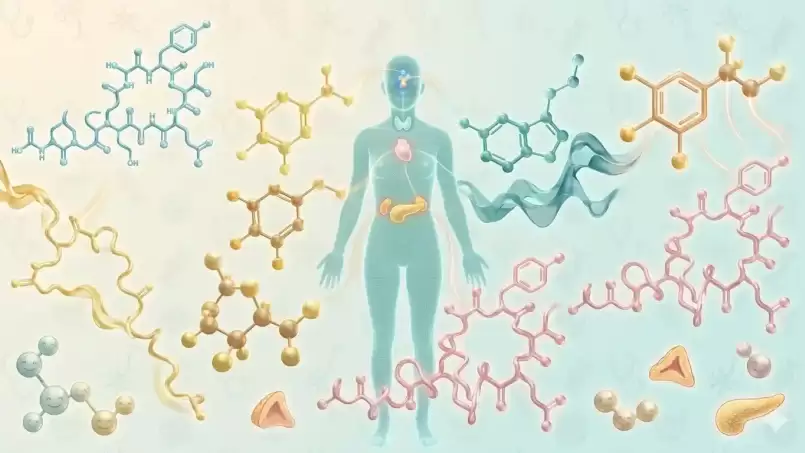
Discover the 10 essential hormones that govern your mood, energy and health. Learn how dopamine, cortisol and other vital messengers work.
Hormones are the invisible engine behind every emotion, physical reaction and vital process in our bodies. From how we sleep to how happy we feel on an average day, these chemical messengers dictate the rhythm of our lives. Here we aim to decipher the alphabet of the human body to better understand how to maintain our inner balance.
The 10 vital hormones and their role
Dopamine - the happiness and reward hormone
Dopamine is responsible for the feeling of satisfaction. It is released when we achieve a goal or experience pleasure and is essential for motivation and concentration.
Cortisol - the stress hormone
Although it has a negative reputation, cortisol is vital for survival. It regulates blood pressure and metabolism in times of stress, but chronic excess can damage the immune system.
Oxytocin - Hormone of love and attachment
Also known as the 'cuddle hormone', oxytocin strengthens social bonds, trust and empathy between people.
Melatonin - The sleep hormone
Produced by the pineal gland, melatonin regulates the circadian rhythm. It tells your body when it's time to rest and ensures restorative sleep.
Ghrelin - The hunger hormone
Ghrelin is the signal the stomach sends to the brain to indicate the need for food. Managing this hormone correctly is the key to maintaining a healthy weight.
Adrenaline - The energy hormone
Prepares the body for the "fight or flight" response. Increases heart rate and blood flow to the muscles, providing that burst of energy needed in critical situations.
Serotonin - The feel-good hormone
Acts as a natural mood stabilizer. Optimal serotonin levels help us to be calmer, happier and more emotionally stable.
Endorphins - Anti-pain hormone
They are the body's natural painkillers. Released during physical exertion or laughter, endorphins reduce the perception of pain and induce a state of euphoria.
Prolactin - The lactation hormone
Although mainly associated with breastfeeding and motherhood, prolactin has over 300 functions in the body, influencing the immune system and metabolism.
Somatotropin - Growth hormone
Essential in childhood for development, somatotropin remains important in adults for tissue rebuilding, muscle mass and bone density.
How to maintain natural hormonal balance?
Balancing these hormones is not just a matter of biology, but also of lifestyle. A balanced diet, sun exposure for serotonin, exercise for endorphins and a rigorous sleep program for melatonin are simple but fundamental steps.
Comments