Chamomile infused in honey or chamomile honey
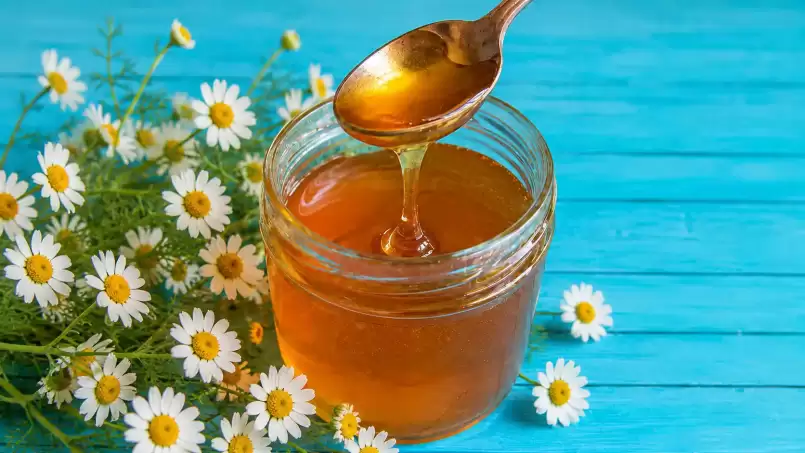
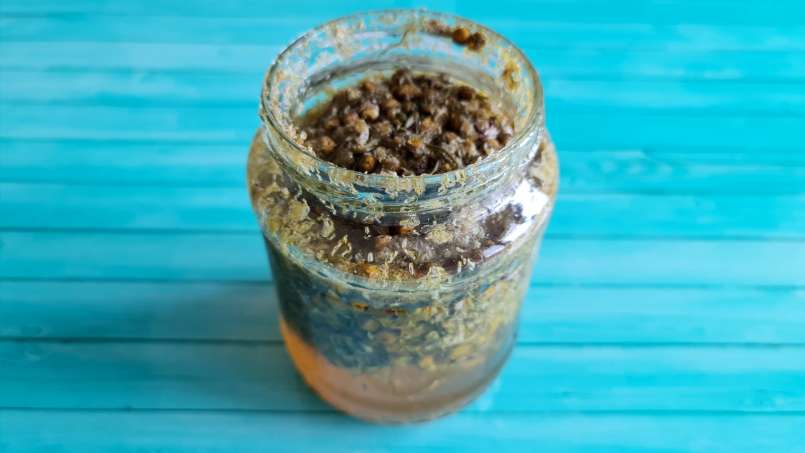
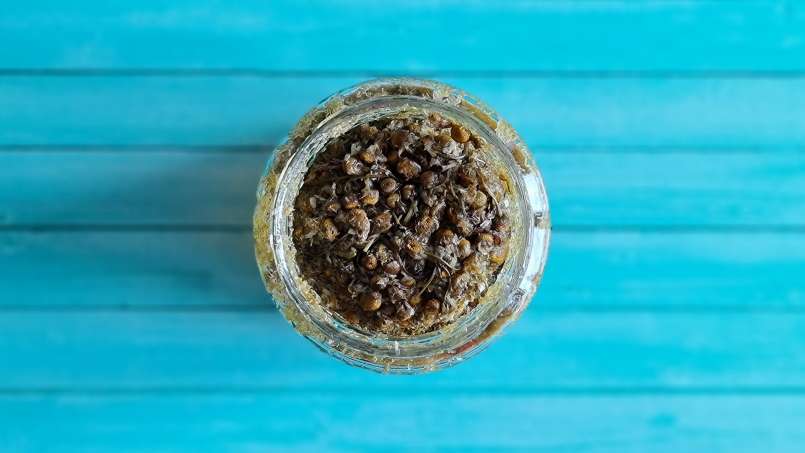
A sweet taste, the aroma of fresh flowers, and a touch of tranquility in every teaspoon 🌼🍯
Chamomile macerated in honey is a gentle natural remedy, cold-prepared from fresh chamomile flowers and natural honey. It can promote relaxation, restful sleep, and easy digestion, as well as soothe an irritated throat; it is a fragrant floral honey, ideal for warm teas or for enjoying on its own.
Servings: 45 servings
About 500–650 g of flavored honey, 1 tablespoon, about 14–15 g
Ingredients
Materials
- - 🫙an 800 g glass jar, clean and completely dry
- - a clean lid
- - a clean spoon (wooden, ceramic, or stainless steel)
- - a fine sieve or cheesecloth for straining
- - a label for the date of preparation
Preparation
- Choose fresh chamomile flowers that are healthy and fragrant, with no blackened, moldy, or damaged parts.
- Gently shake the dust and insects off the flowers. Ideally, you shouldn't wash them if they come from a clean source.
- If you do wash them, though, let them air dry thoroughly for a few hours on a clean towel until there is no water left on the surface.
- Fill the jar with flowers until it is about half full, without packing them down.
- Gradually pour the natural honey over the flowers so that it seeps between them.
- Gently stir with a clean spoon to remove any air pockets.
- Add honey until the flowers are completely covered.
- Close the jar and let it steep for 5–10 days in a cool place, away from light.
- During the first few days, turn the jar upside down or give it a gentle shake once a day.
- After maceration, strain the honey through cheesecloth or a fine sieve and keep only the chamomile-infused honey.
Storage 🧊
Since it is made with fresh flowers, it is recommended to strain the honey after 5–10 days. Do not leave the flowers in the jar for too long, as this can increase the risk of fermentation and give the honey a slightly bitter, vegetal taste.
Do not put a wet spoon into the jar. Moisture can promote fermentation.
Approximate shelf life: 1–3 months, provided the flowers were thoroughly dried, the jar was clean, and the infusion is stored properly.
⚠️ If there are many bubbles, foam, a sour smell, a fermented taste, or pressure building up in the lid, the infusion is no longer recommended for consumption.
Administration
😴 For relaxation: 1 teaspoon in the evening, either on its own or in a warm cup of tea.
🗣️ For a sore throat: Let 1 teaspoon dissolve slowly in your mouth.
🌿 For digestion: 1 teaspoon after a meal.
👶 Children over 1 year old: small amounts, use with caution, only if there are no known allergies.
Important: Do not add to hot tea, only to warm tea.
How can I use this remedy?
🍯 As is, 1 teaspoon at a time, allowed to slowly melt in the mouth
🌼 In lukewarm chamomile, linden, mint, or ginger tea
🍋 with lukewarm water and a little lemon
🥣 in yogurt, oatmeal, or cold desserts
🥄 on toast, pancakes, plain cookies, or homemade flatbreads
Observations
It is not recommended to use wet flowers. Water can dilute the honey in certain areas and promote fermentation.
For a cleaner taste and safer storage, straining is recommended after the maceration period.
If you want a more intense flavor, you can let the mixture macerate for up to 10 days, but it must be checked daily. If signs of fermentation appear, do not consume it.
Do not heat the honey directly over a flame. If it crystallizes, place the jar in lukewarm—not hot—water.
Effects and benefits
- 🌼 It can help you relax and soothe the nervous system.
- 😴 It can promote more restful sleep, especially when consumed in the evening.
- 🍯 It can soothe a sore throat thanks to the texture of the honey.
- 🌿 It can aid digestion after heavy meals.
- 🤍 It can help reduce mild stomach discomfort.
- 🫖 It can relieve mild bloating and minor digestive cramps.
- 🧘 May be helpful during periods of stress, agitation, or overexertion.
- 🛡️ Provides antioxidant compounds from honey and chamomile.
- 🔥 May support a mild anti-inflammatory response.
- 🗣️ May be helpful for mild hoarseness or a dry throat.
- 🍋 Can be added to warm beverages during the cold season.
- 🦷 May temporarily soothe an irritated oral mucosa.
- 🌙 It can be a natural alternative to processed sweets.
- 💛 It may support overall well-being through its taste, aroma, and comforting effect.
- 🌱 It can be used as a functional sweetener in teas.
- 🍽️ It may help stimulate appetite in people who are tired or stressed.
- 🧡 It may relieve mild nausea in some people.
- 🧪 It may concentrate the aroma of fresh flowers into an easy-to-use form.
- 🏡 It is a no-boil remedy that is simple to prepare at home.
- 🌸 It can be used as a naturally flavored honey for teas and desserts.
- 🧴 It can be used occasionally externally in simple face masks, provided a tolerance test is performed first.
Side effects
- ⚠️ Allergic reactions to chamomile, especially in people who are sensitive to ragweed, chrysanthemums, daisies, marigolds, or other plants in the Asteraceae family.
- Itching, skin rashes, sneezing, watery eyes, or irritation.
- Nausea or digestive discomfort, especially when consumed in large quantities.
- 😴 Mild drowsiness, especially if consumed in the evening or with sedatives.
- Increased sugar intake, which is important for people with diabetes or insulin resistance.
- Possible fermentation, as the recipe uses fresh flowers.
- A slightly bitter or grassy taste if the flowers are left in the honey for too long.
- Local irritation if applied to sensitive skin without a patch test.
- Rare, severe allergic reactions, including swelling of the face or lips or difficulty breathing.
Contraindications
- 🚫 Children under 1 year of age, as honey is contraindicated due to the risk of infant botulism.
- People allergic to chamomile or plants in the Asteraceae family.
- People with severe allergies to pollen or bee products.
- People with diabetes or poorly controlled blood sugar, without medical approval.
- People taking anticoagulants or antiplatelet agents.
- People taking sedatives, sleeping pills, or anxiolytics.
- Pregnant or breastfeeding women: caution is advised, and medical approval is recommended, especially with frequent use.
- People scheduled for surgery.
- People on a strict sugar-free diet or a severely restricted carbohydrate diet.
- People with a digestive intolerance to honey.
- Do not use as the sole treatment for infections, severe allergies, chronic insomnia, severe gastritis, or respiratory diseases.
The secret to this recipe is controlling the moisture. Fresh flowers are fragrant but contain water, and honey doesn’t mix well with excess moisture. That’s why the flowers must be picked in dry weather, after the dew has lifted, then left to air-dry before being placed in a jar.
This chamomile honey can be enjoyed in warm teas, with yogurt, on toast, or simply by the spoonful. It’s more than just a flavored honey: it can become a little ritual of calm, flavor, and comfort, especially in the evening or on cold days.
FAQ 💡❓
Can you make chamomile-infused honey using fresh flowers?
➡️ Yes, you can, and the flavor is usually more vibrant, floral, and delicate. It’s important that the flowers be clean, healthy, and thoroughly dried before being added to the honey.
Why do the flowers need to be dried before maceration?
➡️ Because the water on the flowers can dilute the honey and promote fermentation. The flowers must be free of dew, water droplets, and any visible traces of moisture.
Is it a good idea to wash the chamomile flowers?
➡️ If they’re picked from a clean place, it’s better to just shake them gently. If they need to be washed, they must then be dried very thoroughly on the surface, on a clean towel, before being placed in the jar.
How long should honey be left to macerate with fresh chamomile?
➡️ Usually, 5–10 days are sufficient. A longer maceration period can intensify the flavor, but it also increases the risk of fermentation if the flowers contained too much moisture.
Should the honey be strained after steeping?
➡️ Yes, when using fresh flowers, it’s recommended to strain it. This helps it keep better, gives it a smoother texture, and reduces the risk of the flowers fermenting in the jar.
How can I tell if the macerated mixture has fermented?
➡️ Key signs include a sour smell, a fermented taste, lots of bubbles, foam, or a swollen lid. In these cases, the macerated mixture is no longer recommended for consumption.
What does chamomile honey made with fresh flowers taste like?
➡️ It has asweet, floral, slightly herbaceous, and very fragrant taste. It is more delicate than the version made with dried chamomile and better preserves the flavor of freshly picked flowers.
Can it be added to hot tea?
➡️ It is not recommended. Add it to lukewarm tea, after the liquid has cooled slightly, to better preserve the honey’s flavor and the delicate aroma of chamomile.
Can it be used in the evening to help you relax?
➡️ Yes, one teaspoon in the evening—on its own or in lukewarm tea—can become a pleasant relaxation ritual. It is not a sleep aid, but it can help promote a sense of calm.
Is it suitable for children?
➡️ Do not give to children under 1 year of age. For older children, use in small amounts and with caution, especially if there are allergies to pollen, plants, or bee products.
Which honey pairs best with fresh chamomile?
➡️ Acacia honey is delicate and allows the floral aroma to come through clearly. Wildflower honey offers a richer flavor, while linden honey can accentuate the calming and fragrant notes.
Can it replace treatments for insomnia, gastritis, or allergies?
➡️ No. It is a gentle dietary remedy, useful as a supplement, but it does not replace medical diagnosis or treatment, especially for persistent or severe conditions.
Comments