Lemon juice with olive oil and lukewarm water—a traditional remedy for digestion
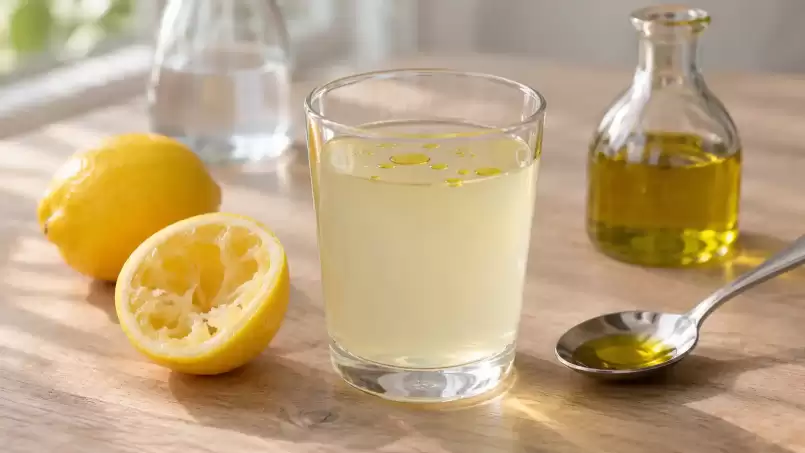
Freshly squeezed lemon juice, olive oil, and lukewarm water in a morning remedy for digestive comfort.
Lemon juice with olive oil and lukewarm water is a traditional home remedy used to promote digestive comfort and regular bowel movements. It is prepared in the morning with freshly squeezed lemon juice and drunk on an empty stomach before breakfast. The water dilutes the sour taste, and the slightly warm temperature makes the drink pleasant to drink. The lemon provides a small amount of vitamin C, and the olive oil supplies unsaturated fats and vitamin E.
Servings: 1 servings
A glass of about 180 ml per person, made with 150 ml of lukewarm water, 15 ml of lemon juice, and 15 ml of olive oil.
Ingredients
Materials
- - A glass with a capacity of at least 250 ml
- - A measuring cup
- - A 15-ml measuring spoon
- - A knife
- - A manual juicer
- - A mixing spoon
Preparation
- Prepare some lukewarm water. Measure out 150 ml of drinking water and warm it gently. It should feel pleasant on the first sip, without being too hot.
- Squeeze the lemon. Wash the fruit under running water, cut it in half, and squeeze one half. Remove the seeds and measure out 15 ml of juice. If the lemon isn’t very juicy, squeeze the other half as well.
- Stir and drink immediately. Pour the juice and lukewarm water into a glass. Add the olive oil and stir vigorously for a few seconds, until the oil droplets disperse into the liquid.
Storage 🧊
The juice and the remaining lemon. If you’ve squeezed more than you need, pour the juice into a clean, tightly sealed container in the refrigerator, and use it the same day for the freshest flavor. Cover the remaining half lemon separately and store it in the refrigerator.
Olive oil. Keep it in a tightly sealed bottle in a cupboard away from light and the heat of the stove. Measure out the amount you need right before cooking.
Administration
If the taste is too sour. Use 180–200 ml of lukewarm water instead of 150 ml, keeping one tablespoon each of juice and oil. If the drink causes heartburn or nausea, stop drinking it.
Observations
Check what’s left in the glass. If you see a layer of oil on the surface, stir it once more before drinking. You can add the oil in a thin stream while stirring to distribute it more easily.
Rinse your mouth with plain water. The drink remains acidic even after dilution. Avoid sipping it throughout the morning to minimize contact with your tooth enamel.
Regarding the digestive effect: Consuming it on an empty stomach is a traditional practice. For this mixture, however, there is no proven digestive benefit to consuming it on an empty stomach or with lukewarm water.
Effects and benefits
- 🌿 Digestive comfort. In traditional practice, the mixture is used as a home remedy before breakfast.
- 🫒 Bowel regularity. Olive oil has been studied separately in people with constipation, with favorable results in some studies.
- 💧 Hydration. The 150 ml of water in the glass contributes to your daily fluid intake.
- 🫒 Monounsaturated fats. One tablespoon of olive oil provides about 10 g, mainly oleic acid.
- 🍋 Vitamin C for collagen formation. One tablespoon of fresh juice provides about 6 mg of this nutrient.
- 🫒 Vitamin E for antioxidant protection of cells. One tablespoon of olive oil provides about 2 mg.
- 🫒 Vitamin K for normal blood clotting. One tablespoon of olive oil provides about 8 micrograms.
- 🫒 Linoleic acid. Olive oil provides a small amount of this essential fatty acid, which the body obtains from the diet.
Side effects
- A burning sensation or sour taste in your throat, if you’re sensitive to citrus fruits or fatty foods.
- Nausea or a heavy feeling in your stomach, especially if the oil is hard to digest when taken on an empty stomach.
- Loose stools or cramps, especially when consuming larger amounts of oil.
- Enamel erosion over time, if you frequently drink acidic beverages or sip them for long periods.
Contraindications
- Known allergy to lemon or any other ingredient used. Avoid this preparation.
- Biliary colic or symptomatic gallstones. Avoid using this mixture as a remedy for gallbladder problems.
- Reflux triggered by citrus fruits or fats. Avoid this preparation if it causes heartburn.
- A medically prescribed low-fat diet. Count the approximately 14 g of fat from the tablespoon of oil toward your prescribed limit.
- Diagnosed tooth erosion. Follow your dentist’s recommendations regarding acidic beverages.
What does the taste reveal about extra virgin olive oil? An extra virgin olive oil may have notes of grass, green olives, or almonds and may leave a slightly peppery sensation in the throat. These notes come through more clearly in a glass of juice and water than in a dish with multiple ingredients. For this recipe, it’s worth choosing an oil that you enjoy even when tasting it on its own.
What’s left in the juicer? A large portion of the lemon’s fiber remains in the pulp and the fruit’s membranes. Mainly water, juice, and oil end up in the glass. If you’re looking to add more fiber to your breakfast, a whole fruit or a serving of oatmeal can round out the meal.
FAQ 💡❓
Why might I feel the need to go to the bathroom right after breakfast?
➡️ When you eat, your stomach may send a signal to your colon to get moving. This is called the gastrocolic reflex. If you drink the mixture before a meal, the urge may also come from breakfast itself.
Does a softer stool mean I’ve digested my food better?
➡️ Stool consistency and the way your stomach processes a meal are two different things. A softer stool may reflect a change in bowel transit. If you also experience cramps or an urgent need to use the restroom, the mixture may be difficult to tolerate.
Why might I experience heartburn even if the drink is lukewarm and well diluted?
➡️ The juice remains acidic, and citrus fruits and fats can trigger symptoms in some people with acid reflux. The extra water changes the taste, but the spoonful of oil remains intact. If the heartburn returns after consumption, avoid this combination.
Why does extra-virgin olive oil sometimes feel peppery in the throat?
➡️ Some extra-virgin olive oils have a natural spiciness that you can taste even when you taste them on their own. In a drink, the sensation may be more pronounced if the oil has pooled on the surface and you swallow almost all of it with the first sip.
Can I take my morning medication on an empty stomach with this drink?
➡️ Follow the instructions in the package insert or your doctor’s advice. If the medication is to be taken with plain water, use plain water. Wait the recommended amount of time before drinking the mixture or eating breakfast.
Does the drink become cloudy because the oil dissolves in the lukewarm water?
➡️ The cloudiness occurs when stirring breaks the oil into fine droplets that scatter the light. The droplets gradually come together and rise to the surface again. You can see the change if you leave the glass on the table for a few minutes.
Can I replace freshly squeezed lemon juice with bottled lemon juice?
➡️ You can use regular bottled lemon juice if that’s what you have on hand. Check the label to see if it’s ready-to-use juice or concentrate that needs to be diluted. Freshly squeezed juice usually has a more vibrant flavor.
Does drinking this break intermittent fasting if I have it before my first meal?
➡️ Yes, if you’re following a zero-calorie fast. Even if you drink it before breakfast, the oil provides about 120 kcal per tablespoon.
Comments