Rosemary-Infused Water with Honey and Lemon – Made with a Hot Infusion
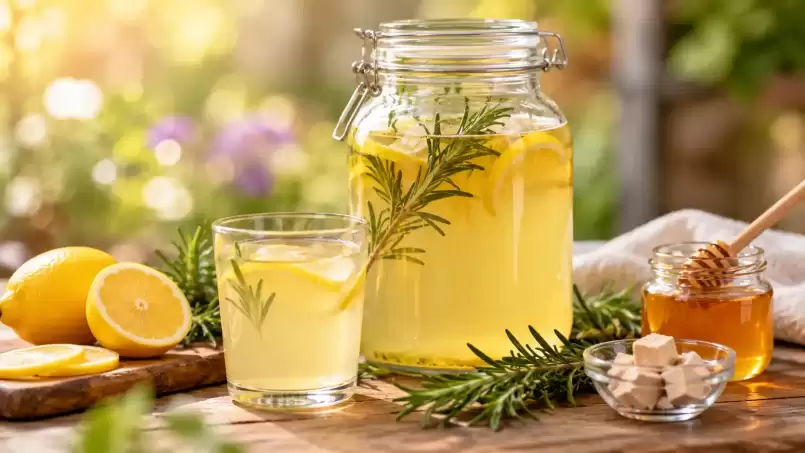
🌿 Rosemary reveals its intense aroma in a refreshing, slightly tangy fermented drink made with honey and lemon!
Discover rosemary-infused water with honey and lemon—a refreshing, slightly tangy drink rich in natural flavors and plant compounds. Rosemary has traditionally been valued for its digestive benefits, while lemon adds freshness and vitamin C. A flavorful alternative to ordinary soft drinks.
Servings: 9 servings
One serving is approximately 200 ml of fermented rosemary water, served cold, either undiluted or diluted. When trying it for the first time, it is recommended to start with a smaller amount—50–100 ml—to check for digestive tolerance.
Ingredients
Materials
- - 3-liter food-grade jar, clean and sanitized
- - Stainless steel pot for heating water
- - Stainless steel or food-grade silicone spoon
- - Fine-mesh strainer or food-grade cheesecloth
- - Citrus juicer
- - Food-grade thermometer
- - Fermentation lid with valve
- - Calibrated food-grade pH meter
- - Food-grade PET bottles for storage
Preparation
- How to Make Rosemary Tea 🌿
Wash the rosemarythoroughly. Bring the water to a boil, turn off the heat, and add the sprigs. Cover the pot and let it steep for 10–15 minutes, then strain. - Adding Honey and Lemon 🍋
Let the infusion cool to below 30°C. Add the honey and the freshly squeezed juice from the two lemons. Stir until the honey is completely dissolved. - Fermenting the beverage 🫧
Add the yeast and stir gently. Transfer the liquid to a food-grade container with a fermentation lock. Maintain a controlled temperature of approximately 20–22°C for about 24–48 hours, monitoring the fermentation activity and acidity. - Filtering and Chilling ❄️
Once fermentation is complete and the acidity has been checked, transfer the beverage to clean, food-grade PET bottles. Chill immediately in the refrigerator. Serve in small portions, preferably cold.
Storage 🧊
- In the refrigerator: Store the beverage at a maximum of 4°C and consume it preferably within 48 hours, or within 72 hours at the latest.
- Container: Use clean, food-grade PET bottles suitable for carbonated beverages.
- Pressure: Check the containers and carefully release the gas, as fermentation can continue slowly even at low temperatures.
- Before consumption: Check the appearance, smell, and container. Mold, a rotten smell, or excessive pressure indicate that the beverage should be discarded.
- Important: Normal appearance and smell do not guarantee the absence of harmful microorganisms.
Administration
- Typical intake: 100–200 ml, occasionally, depending on tolerance.
- When trying it for the first time: start with 50–100 ml to assess digestive tolerance.
- Best served: preferably with a meal or after a meal, if the acidity is well tolerated.
- Serving instructions: chilled, neat, or diluted with still water.
- Caution: This is not a medical treatment, and there is no established therapeutic dose for this beverage.
Observations
- 🍃 Fresh rosemary offers a greener, more delicate aroma, while dried rosemary can have a more intense flavor.
- 🍯 Honey serves a dual purpose: it sweetens the drink and provides the sugars needed for fermentation.
- 🍋 Lemon balances the intense aroma of rosemary and contributes to the drink’s acidity.
- 🫧 Fermentation can produce natural effervescence, as well as varying amounts of alcohol.
- 🌡️ Temperature affects the speed of fermentation; avoid exposing the container to direct sunlight or excessive heat.
- ⏳ Fermentation time may vary depending on temperature, yeast, and the amount of sugars.
- ⚠️ A pleasant taste and aroma do not guarantee the drink’s safety; check the acidity before tasting.
- 🧴 Do not use airtight glass containers during fermentation, as gas pressure can cause them to shatter.
- ❄️ After fermentation, chill the beverage immediately and consume it within a short period of time.
- 🌱 Do not add rosemary essential oil; it is much more concentrated than an infusion of the herb.
- 🥤 For a more delicate flavor, the drink can be diluted with still water before serving.
Effects and benefits
- 🌿 Digestive comfort: Rosemary is traditionally used for mild indigestion.
- 🩺 Relief from mild digestive spasms: a traditional use of rosemary.
- 💧 Hydration: contributes to daily fluid intake.
- 🌱 Rosmarinic acid intake: a natural phenolic compound found in rosemary.
- 🛡️ Antioxidant activity: contains compounds with experimentally demonstrated antioxidant effects.
- 🍃 Polyphenol intake: provides bioactive plant compounds.
- 🍋 Flavonoid intake: Lemon contains natural antioxidant compounds.
- 🍊 Vitamin C intake: Lemon juice provides modest amounts.
- 🌬️ Natural freshness: the aroma of rosemary and lemon offers a refreshing sensation.
- 🥤 Supports hydration: the aromatic taste may encourage fluid intake.
- 🫧 Natural carbonation: Fermentation can produce a pleasant fizz.
- 🧪 Source of organic acids: Fermentation can alter the acidity profile.
- 🌸 Aromatic complexity: Fermentation can enrich the drink’s flavor.
- 🌙 Caffeine-free: Suitable for those who avoid caffeinated beverages.
- ⚖️ Low-fat: the ingredients contain very few fats.
- ❤️ Low-sodium: no salt needs to be added.
- 🍯 Naturally sweetened: honey provides sweetness and aromatic compounds.
- 🌾 Natural herbal flavor: made with rosemary leaves, with no added essential oil.
- 🥛 Alternative to commercial juices: allows you to control the ingredients used.
- 🍹 Adjustable sweetness: can be diluted to reduce the sugar content per serving.
Side effects
- 🫧 Bloating and belching – caused by gases produced during fermentation.
- 🔥 Heartburn – acidity can aggravate acid reflux.
- 🤕 Abdominal discomfort – especially with excessive consumption.
- 🌿 Allergic reactions – possible with rosemary, citrus fruits, or honey.
- 🤢 Nausea – in sensitive individuals.
- 🚽 Loose stools – possible in cases of digestive intolerance.
- 🩸 Increased blood sugar—due to residual sugars.
- 🍷 Alcohol exposure—fermentation can produce ethanol.
- 🦷 Tooth sensitivity—acidity can contribute to enamel erosion.
Contraindications
- Pregnancy – should be avoided due to fermentation and the medicinal use of rosemary.
- Breastfeeding – this fermented beverage is not recommended.
- Children under 12 years of age – consumption is not recommended.
- Allergy to rosemary, citrus fruits, or honey – direct contraindication.
- Gallstones or biliary obstructions – medicinal rosemary is contraindicated.
- Liver disorders – it is recommended to avoid medicinal preparations containing rosemary.
- Severely compromised immunity – risk associated with unpasteurized fermented beverages.
- Strict alcohol abstinence—the beverage may contain ethanol.
- Uncontrolled diabetes—residual sugars may raise blood sugar levels.
- Severe gastroesophageal reflux or active ulcer—acidity may worsen symptoms.
Rosemary (Salvia rosmarinus, formerly known as Rosmarinus officinalis) is an aromatic plant native to the Mediterranean region. Used since ancient times in cooking and traditional medicine, it is prized for its intense aroma and plant compounds.
🧠 Rosemary and Memory—Between Tradition and Research
In European culture, rosemary has been symbolically associated with memory and mental clarity. Modern research has investigated these potential effects, but there is no evidence that rosemary-infused water improves memory or concentration.
🛡️ Rosmarinic acid – a valuable compound in the plant
Rosemary contains rosmarinic acid, a phenolic compound studied for its antioxidant and anti-inflammatory activity in the laboratory. However, its presence in the beverage does not guarantee similar therapeutic effects in the body.
🫧 What makes fermentation different from simple steeping?
Steeping extracts some of rosemary’s aromatic and plant compounds into the water. Subsequent fermentation converts some of the sugars, producing carbon dioxide, alcohol, and changes in the aromatic profile.
🍯 Why can honey support fermentation?
Honey contains mainly fructose and glucose, sugars that yeast can use. Although concentrated honey has antimicrobial properties, diluting it in water alters these conditions and can allow fermentation to occur.
🌱 Rosemary and Microorganisms
Certain compounds in rosemary have shown antimicrobial activity in experimental studies. For this reason, the concentration of the herb can influence the activity of certain microorganisms involved in fermentation.
🥤 An aromatic alternative to soft drinks
Rosemary-fermented water stands out for its combination of the plant’s resinous aroma, citric acidity, and the sweetness of honey. It can serve as an artisanal alternative to some commercial beverages, but it is not automatically low in sugar or alcohol-free.
🔬 Fermented does not necessarily mean probiotic
For a beverage to be considered probiotic, it must contain identified microorganisms, in adequate quantities, with proven health benefits. Homemade fermentation does not guarantee these characteristics.
🌍 A reinterpretation of traditional fermented beverages
The recipe draws inspiration from homemade fermented beverages, such as elderflower drink, but replaces the floral aroma of elderflower with the Mediterranean notes of rosemary. Hot infusion followed by fermentation yields a different flavor profile than direct cold maceration.
FAQ 💡❓
Why can rosemary add flavor to fermentation, but at the same time slow it down?
➡️ Rosemary contains compounds with experimentally proven antimicrobial activity. These can influence the growth of certain microorganisms, making fermentation less predictable.
How can honey feed yeast if it is known for its antimicrobial properties?
➡️ Concentrated honey inhibits many microorganisms due to its low water content. Once diluted, its sugars become available to yeast, promoting fermentation.
What makes rosemary water such a different drink from elderflower?
➡️ Rosemary offers resinous, herbaceous, and slightly camphor-like notes, while elderflowers bring delicate, floral aromas. Fermentation can accentuate these differences.
Can fermented rosemary water contain alcohol without adding a single drop?
➡️ Yes! Yeast converts the sugars inthe honey into carbon dioxide and alcohol. The amount of alcohol can vary and cannot be determined by taste alone.
Why don’t more bubbles necessarily mean a healthier drink?
➡️ Bubbles indicate gas formation, not microbiological quality. Intense fermentation guarantees neither safety nor the presence of beneficial microorganisms.
Can rosemary boost memory and concentration?
➡️ Some studies have explored the influence of rosemary on cognitive functions, but there is no evidence that rosemary-infused water improves memory or concentration.
Does fermentation automatically turn the drink into a natural probiotic?
➡️ No. To be considered probiotics, microorganisms must be identified and have proven benefits. Home fermentation does not guarantee these conditions.
What happens to rosemary’s antioxidants during fermentation?
➡️ Fermentation can alter certain phenolic compounds, including their bioavailability. However, there is no evidence that this recipe becomes more antioxidant-rich or therapeutically effective.
Why can a drink containing rosemary—traditionally used for digestion—cause heartburn?
➡️ Although rosemary is traditionally used for indigestion, the acidity of the lemon and the gases produced by fermentation can aggravate gastroesophageal reflux in sensitive individuals.
Is it true that rosemary’s aroma comes from the same compounds found in its essential oil?
➡️ Partially, yes. The leaves contain aromatic compounds such as 1,8-cineole and alpha-pinene. However, the infusion is much more diluted and differs significantly from the concentrated essential oil.
Can a fermented beverage appear perfectly normal and yet still be unsafe?
➡️ Yes. Some dangerous microorganisms do notvisibly alter the taste, smell, or appearance. Controlling acidity and maintaining hygiene are essential, but they do not replace verifying the safety of the fermentation process.
Why might the same recipe taste different every time?
➡️ Temperature, honey, the freshness of the rosemary, and yeast activity all influence fermentation. Even small differences can alter the flavor, acidity, and effervescence.
Comments