Rosehip Powder
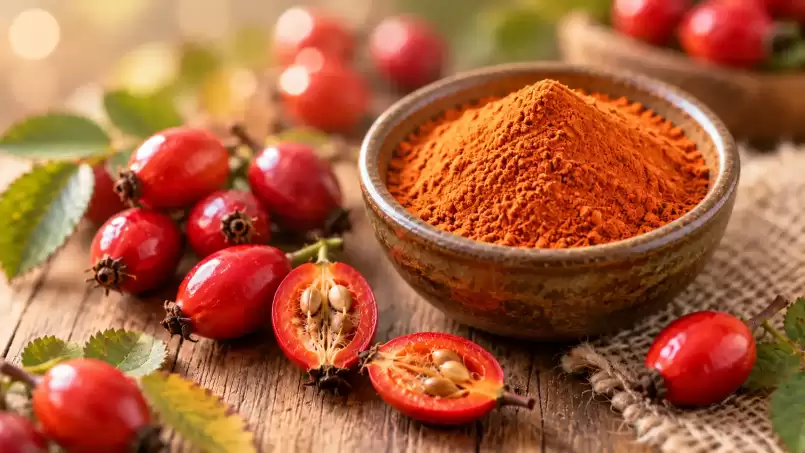
A tangy, simple, and powerful powder for the cold season, providing vitality and antioxidant protection.
Rosehip powder is a natural remedy rich in vitamin C, antioxidants, and valuable plant compounds. It can support immunity, the body’s resistance during the cold season, energy levels, skin health, blood vessels, and joint comfort—especially when gently prepared and consumed in short courses of treatment.
Servings: 40 servings
~40 servings, 1 serving = 1 level teaspoon (approximately 3 g)
Ingredients
500 g ripe, red, healthy rose hips
Materials
- - a small, sharp knife
- - a teaspoon or a knife with a rounded tip for removing seeds and fuzz
- - kitchen scissors
- - baking sheet, clean paper, or a sieve for drying
- - fine-mesh sieve for sifting
- - coffee grinder or small, powerful blender
- - small, airtight glass jar
Preparation
- Washing and Cleaning: Wash the rose hips thoroughly, cut them in half, and remove the seeds and inner hairs.
- Drying: Place the cleaned rose hips in a single layer on paper or a sieve in a dry, well-ventilated area. Let them dry for about 14–30 days, until they are completely dehydrated.
- Grinding: Chop the dried rose hips with scissors, then grind them in a coffee grinder. Sift the powder through a fine sieve, and grind the remaining pieces again.
- Storage: Place the fine powder in an airtight jar and store it in a cool, dry, dark place. Ideally, prepare only as much as you can consume within 2 weeks.
Storage 🧊
Storage Conditions: Store in a cool, dry, dark place, away from light, heat, and moisture.
Shelf Life: For maximum freshness, it is recommended to consume within approximately 2 weeks, preferably within one month at most. These timeframes are guidelines, not guaranteed safety periods.
Infusion: Store in the refrigerator and consume on the same day, ideally within 24 hours.
Warning: Discard any powder with an unusual odor, signs of mold, or moisture.
Administration
- Powder consumed as is: Take 1 level teaspoon 2–3 times a day, with water or mixed into honey, yogurt, or a smoothie. It can be consumed before or after meals, depending on digestive tolerance.
- Extract/cold macerate: Place 1 level tablespoon of powder in 200 ml of still water in a covered glass and let it macerate for 12 hours in the refrigerator (from evening until morning). Strain and drink the liquid in 2–3 doses throughout the day.
- Macerate combined with an infusion: Strain the macerate from Method 2, then pour 100 ml of boiling water over the remaining powder. Let it steep for 10 minutes, then strain and let it cool. Combine the infusion with the cooled macerate and consume it in 2–3 doses on the same day.
Note: The three methods are alternative administration options and should not be combined on the same day. The quantities are guidelines for adults, as powder prepared at home does not have a standardized content of active ingredients.
Observations
- The tiny hairs inside the fruit must be carefully removed, as they can irritate the mucous membranes.
- The amount of vitamin C varies depending on the variety, ripeness, drying process, and storage conditions. Powder prepared at home does not have a standardized vitamin C content.
- To minimize vitamin C loss, the powder should preferably be added to cold or lukewarm dishes, not to boiling liquids.
- The powder is not a substitute for a balanced diet or prescribed medical treatments.
Effects and benefits
- 🛡️ Supports immunity: Vitamin C contributes to the normal functioning of the immune system.
- 🍊 Natural source of vitamin C: supplements your diet with an essential vitamin, in amounts that vary depending on drying and storage.
- ✨ Antioxidant protection: Vitamin C and polyphenols help protect cells against oxidative stress.
- 🦴 Supports collagen formation: Vitamin C is necessary for the body’s normal synthesis of collagen.
- 🦵 Joint comfort: Certain standardized rosehip powders have shown modest effects on pain and stiffness associated with osteoarthritis; the effect of homemade rosehip powder remains unconfirmed.
- 💪 Reduces fatigue: Adequate vitamin C intake helps reduce fatigue and exhaustion.
- 🩸 Iron absorption: Vitamin C promotes the absorption of iron from plant-based foods.
- ❤️ Blood vessel health: Vitamin C supports the formation of collagen, which is necessary for the normal functioning of blood vessels.
- 🌸 Skin health: It contributes to the formation of collagen necessary for maintaining the normal structure of the skin.
- 🦷 Gum health: Vitamin C contributes to the formation of collagen necessary for the normal functioning of the gums and teeth.
- 🌿 Plant Compounds: Contains polyphenols and carotenoids, which have been studied for their antioxidant properties.
- ⚡ Normal Energy Metabolism: Vitamin C plays a role in the metabolic processes through which the body uses energy.
Side effects
- Stomach discomfort or heartburn, especially in sensitive individuals.
- Nausea, especially after consuming large amounts.
- Diarrhea or loose stools, in cases of reduced digestive tolerance.
- Bloating and flatulence.
- Abdominal cramps, occasionally.
- Irritation of the mouth or throat, if the powder contains unremoved hairs.
- Rare allergic reactions, including skin rashes.
Contraindications
- Allergy to rose hips – avoid consumption entirely.
- Gastritis, ulcers, or active reflux – may exacerbate stomach discomfort.
- History of oxalate kidney stones – exercise caution with concentrated and prolonged use.
- Hemochromatosis – vitamin C may increase iron absorption.
- Severe kidney disease – concentrated doses require medical approval.
- Pregnancy and breastfeeding – insufficient data is available for use in medicinal doses.
- Young children—concentrated doses require pediatric advice.
- Anticoagulant therapy—consult a doctor before regular use.
- Cancer treatments—discuss concentrated supplementation with your oncologist.
A Valuable Food Source in Times of Scarcity: During World War II, rose hips were used in the United Kingdom to make syrups as an alternative source of vitamin C at a time when citrus fruits were hard to come by.
More Than Just Vitamin C: Rose hips also contain carotenoids, polyphenols, and other plant compounds. Their composition varies depending on the species, ripeness, and processing method.
Benefits for Joint Health: Some clinical studies have investigated standardized rosehip powders for alleviating osteoarthritis symptoms, with modest but promising results. These results do not demonstrate the same efficacy for powder prepared at home.
An interesting fact: Rose hips are botanically speaking false fruits. The red, fleshy part comes from the floral receptacle, while the true fruits are the hard, seed-like structures found inside.
FAQ 💡❓
Is rosehip powder more beneficial than rosehip tea?
➡️ The powder allows you to consume the finely ground pulp, including certain fibers and compounds that are not fully extracted into water. Tea provides only the substances that dissolve into the liquid.
Why don’t all rosehip powders contain the same amount of vitamin C?
➡️ The content depends on the fruit variety, harvest time, drying temperature, and storage conditions. Two powders that look identical may have different nutritional values.
Can rosehip powder replace vitamin C supplements?
➡️ It can contribute to your dietary intake of vitamin C, but it does not provide an exact dose. To correct a diagnosed deficiency, it is important to know the exact amount of vitamin C being taken.
What is the connection between rose hips and iron absorption?
➡️ Vitamin C helps the body absorb iron from plant-based sources, such as lentils, beans, or spinach. Combining them in a meal can be beneficial.
Why isn’t it enough to grind rose hips along with their seeds?
➡️ The main problem is the irritating little hairs inside. Some commercial powders include processed seeds, but this process is not the same as grinding the whole fruit in a regular grinder.
Is there evidence that rose hips reduce joint pain?
➡️ Yes, there are small studies with encouraging results for certain standardized powders. The benefits were modest and do not prove that any rose hip powder has the same effect.
Is it normal for rosehip powder to taste tart?
➡️ Yes. The tart taste comes from natural organic acids. However, the intensity of the taste does not indicate exactly how much vitamin C the product contains.
Can I combine rosehip powder with other sources of vitamin C, such as sea buckthorn?
➡️ Yes, in moderate dietary amounts. The combination does not guarantee additional benefits, and people with sensitive stomachs may experience greater discomfort.
Does it make sense to take rosehip powder if I already eat plenty of fruits and vegetables?
➡️ Yes, to diversify your diet, but it’s not necessary. A varied diet can provide the necessary vitamin C without supplements or concentrated remedies.
Why shouldn’t the antioxidant effect be confused with the prevention of serious diseases?
➡️ Antioxidant activity observed in the laboratory does not automatically mean the prevention of cancer or cardiovascular disease. Solid clinical studies are needed to draw such conclusions.
Comments